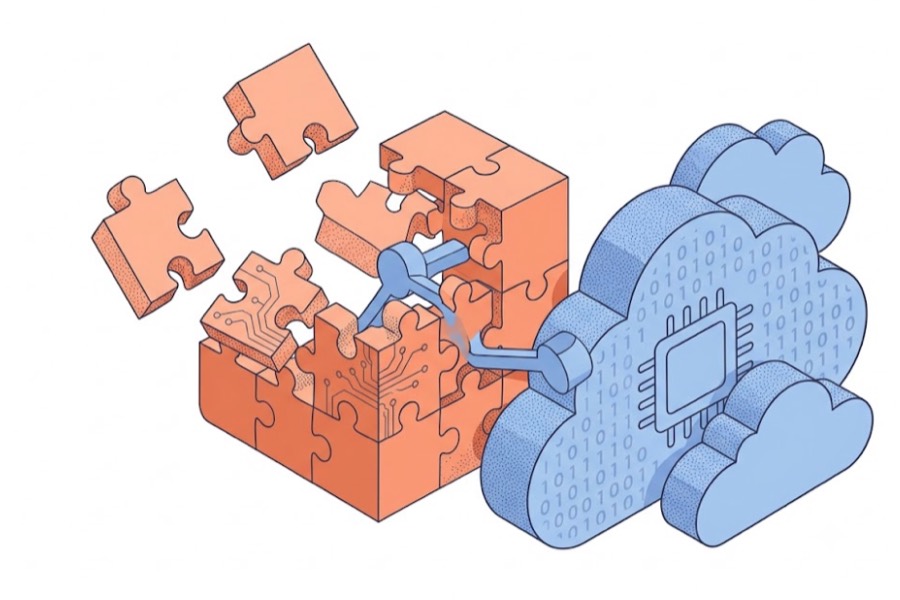
The fix for tool sprawl isn't a better dashboard layered on top of five disconnected systems. It's moving client, project, and finance data into one place from the start.
The tool sprawl pattern
A media agency running paid campaigns across four platforms looks organized from the outside. Dashboards everywhere. Reports going out on schedule.
Ask the founder where a specific client's account actually stands — spend pacing, creative approvals, invoice status — and the answer usually takes three tabs and a Slack search to assemble.
Most hybrid media agencies notice this the same way: not as one big failure, but as a dozen small delays that add up across a week. That's a big part of why most media agency workflows break in the first place.
Campaign performance lives in the ad platforms themselves. Creative briefs live in a project tool. Client billing lives in a spreadsheet someone updates when they remember.
None of these tools is wrong on its own. The problem is that no record connects them. A founder checking on a client's account has to reconstruct the picture from scratch every time, instead of opening one place and seeing it.
What connected data actually looks like
When client, project, and finance data live in the same workspace, account status stops being a research project. A founder can see which campaigns are active, which creative is awaiting client sign-off, and which invoice is overdue — for any client, in one view. A dedicated invoice tracker exists to close that exact gap, but it only helps once the rest of the data lives somewhere connected to it.
Account managers benefit the same way. They stop needing a standing call just to confirm what's already true.
A cloud-based agency management system has to do what a stack of point tools can't: hold client, project, and finance data together and keep it current automatically.
That means the client record connects to active campaigns the moment a project starts — not through a customer management system that someone updates separately, on a different schedule.
It means tracking work the way media agencies actually run it: creative briefs, approval rounds, platform access, attribution notes. Most project tracking software assumes generic cards built for sprints, not campaign cycles. That's exactly where those hours quietly disappear once delivery and billing stop talking to each other.
And it means working the same whether someone opens it from a client site, the office, or a phone between meetings. An agency workflow that only holds together on one device isn't a system — it's one more tool waiting to be replaced by the next one.
The real test for any system
This is the actual test for any agency management system: does it remove a tool, or does it become a sixth one?
Agency OS runs as a single connected Notion workspace — client records, campaigns, creative approvals, and invoices all referencing the same data. Update one, and the founder's view updates with it, from any device.
Where to start
Start with one client account. Bring their campaign status, creative approvals, and invoice into a single record — and notice how much faster the next status check takes.