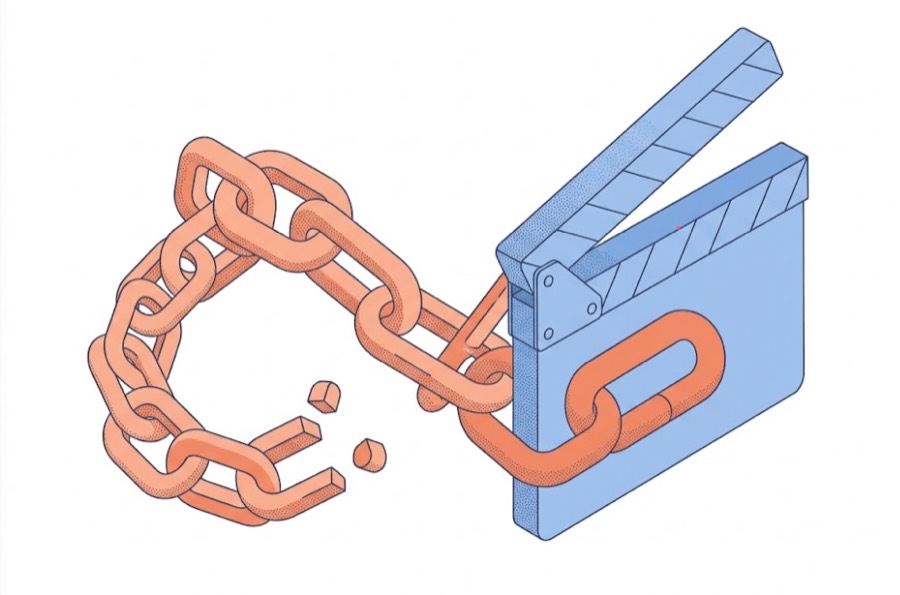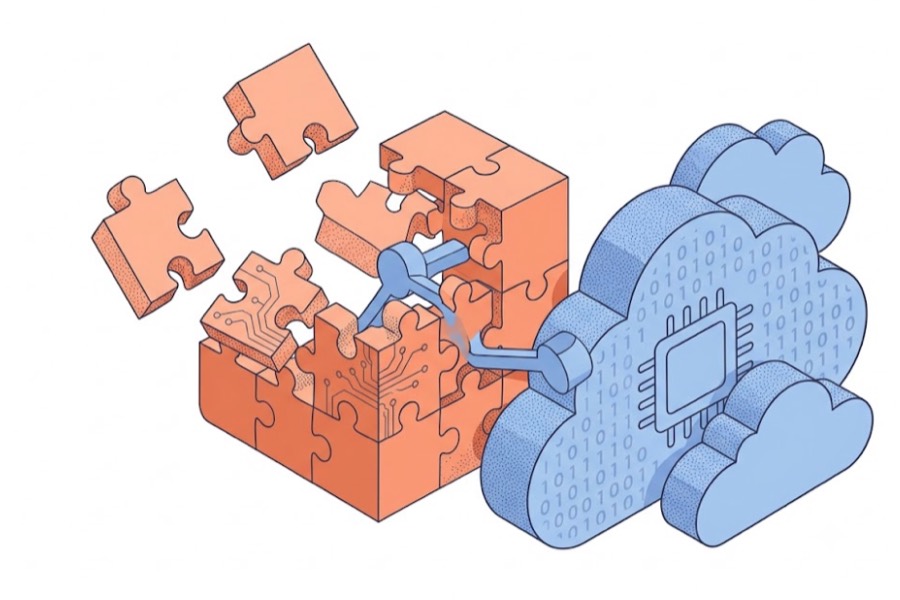
The five-tool problem doesn't get solved by adding a sixth tool that promises to connect the other five. It gets solved by moving client, project, and finance data into one place from the start.
The five-tool problem
Most AI agencies run distributed teams by design. A prompt engineer in one timezone, a fine-tuning specialist in another, a founder checking three different systems before lunch.
Client status lives in one tool. Deployment status lives in another. Billing lives in a spreadsheet nobody else can open.
There's a pattern to this. It shows up almost exactly when the agency stops being two people and becomes six. Each new client, each new model deployment, adds one more place to check. By month nine, the founder is the only person holding the full picture — and even they're guessing some of it.
Ask an AI agency founder what's happening with a specific client right now, and the honest answer is usually: let me check three places and get back to you.
The eval set results sit in a shared drive. The RAG pipeline status sits in a project tool. The invoice for last month's inference costs sits in an inbox, somewhere between "sent" and "overdue." That's the exact gap a dedicated invoice tracker is built to close, even before the rest of the system catches up.
None of this is anyone's fault. Each tool solved one problem when it was added. The cost shows up later — in the time it takes to answer a simple question, and in the small things that quietly slip because no one owns the full view.
What a cloud-based system actually needs to do
When client, project, and finance data live in one workspace, the question changes. Instead of chasing three systems, the founder opens one record. It shows which models are in deployment, which invoices are outstanding, and which client hasn't heard from anyone in two weeks.
The team benefits too. A contractor picking up a deployment task doesn't need a Slack thread to know the client's context, the brief, or the billing terms — it's already linked to the project.
This sits inside the larger question of what an agency management system needs to actually do for an AI agency — staffing, delivery, finance, all of it. The cloud part adds one more requirement on top: everything has to update from anywhere, automatically.
A cloud-based agency management system has one job: keep client, project, and finance data connected, in sync, and reachable from anywhere — without anyone re-entering the same information twice.
That means a few things specifically. A real agency management system links client records to active projects automatically — not through a separate customer management system updated by hand every time a project changes status.
It tracks delivery the way an AI agency actually delivers — model versions, deployment stages, eval results — not generic task cards borrowed from project tracking software built for sprints. Get this layer wrong, and the agency ends up logging hours without the margin to show for it.
And it travels. A founder checking deployment status from a phone needs the same data a fine-tuning specialist sees from their desk. A system that only works well on one device isn't really a system. It's another tool waiting to be replaced.
What it looks like in practice
This is the requirement most off-the-shelf tools miss. They solve client management, or project tracking, or invoicing — rarely all three, and almost never as one connected agency workflow that updates everywhere the moment one thing changes.
Agency OS runs as a connected Notion workspace, accessible from any device. The client record, the project, the deployment status, and the invoice link back to the same source. Update one, and the rest reflect it.
Where to start
Start with one client. Move their project, their deployment status, and their open invoice into the same record — and notice how much faster the next status update gets answered.